

“Root canal” is one of the most feared phrases in dentistry — and one of the most misunderstood. The reputation it carries belongs to a procedure that no longer exists. Modern root canal treatment, performed with today’s techniques and anesthesia, is a routine procedure that relieves pain rather than causes it. Most patients are genuinely surprised by how manageable it is.
At Magnolia Way Dentistry in Apex, NC, Dr. Wayand performs root canal treatment to eliminate infection, relieve the severe discomfort that comes with an inflamed or infected tooth, and preserve your natural tooth rather than extracting it. Keeping your natural tooth is almost always the better long-term outcome — and root canal therapy is what makes that possible.
What Is a Root Canal — and Why Is It Needed?
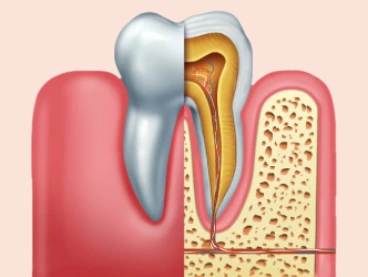
Inside every tooth, beneath the hard enamel and dentin, is a chamber of soft tissue called the pulp. The pulp contains nerves, blood vessels, and connective tissue — it’s what makes your tooth sensitive to temperature and pressure. When you’re young and your tooth is still developing, the pulp plays an important role. In a fully developed adult tooth, the pulp is no longer essential to the tooth’s function or survival.
When bacteria from a deep cavity, a cracked tooth, or a traumatic injury reach the pulp, an infection develops. The pulp becomes inflamed, the pressure inside the tooth builds, and the result is often severe, throbbing pain. Left untreated, the infection spreads — into the surrounding bone, potentially into neighboring teeth, and in serious cases, beyond the jaw.
Root canal treatment removes the infected pulp, cleans and disinfects the root canals inside the tooth, and seals everything off — eliminating the infection, stopping the pain, and saving the tooth structure.
Signs You May Need a Root Canal
Not every case involves obvious pain. Some of the most common indicators that root canal treatment may be needed include:
- Severe, persistent toothache — especially throbbing pain that intensifies when lying down
- Prolonged sensitivity to heat or cold that lingers well after the temperature source is removed
- Sharp pain when biting or chewing
- A darkening or discoloration of a tooth
- Swelling or tenderness in the gums near a specific tooth
- A visible pimple-like bump on the gum (called a dental fistula or sinus tract) — a sign of chronic infection draining through the tissue
- A tooth that was previously injured or had deep dental work
Some infected teeth cause no pain at all in their early stages — which is why regular exams and X-rays matter. An abscess detected at a routine checkup is far easier to treat than one that’s been silently progressing for months.
If you’re experiencing any of these symptoms, don’t wait. Call Magnolia Way Dentistry for a prompt evaluation — the sooner an infection is addressed, the simpler the treatment and the better the outcome.
What to Expect During Root Canal Treatment
Understanding what actually happens during a root canal makes it much less intimidating. The procedure is typically completed in one to two appointments, depending on the complexity of the tooth and the extent of infection.
Step 1: Examination and X-Rays
Dr. Wayand begins with a thorough clinical evaluation and X-rays to assess the extent of infection, the anatomy of the root canals, and the condition of the surrounding bone. This information guides the entire treatment plan.
Step 2: Anesthesia
Local anesthesia is administered to fully numb the tooth and surrounding tissue. The area is completely numb before any treatment begins — you should feel nothing more than pressure during the procedure. For anxious patients, oral sedation is also available to make the entire appointment more comfortable. The pain you feel before a root canal, from the infection itself, is typically far worse than anything experienced during treatment.
Step 3: Accessing and Cleaning the Canals
A small opening is made through the top of the tooth to access the pulp chamber. Using specialized instruments, Dr. Wayand carefully removes the infected and inflamed pulp tissue, then shapes and cleans each root canal thoroughly. The canals are irrigated with disinfecting solution to eliminate remaining bacteria.
Step 4: Sealing the Tooth
Once the canals are fully cleaned and shaped, they’re filled with a biocompatible rubber-like material called gutta-percha, which seals the space and prevents reinfection. A temporary or permanent filling is then placed to close the access opening.
Step 5: Crown Placement
A tooth that has undergone root canal treatment is more brittle than a vital tooth and needs protection from fracture — particularly on back teeth that handle chewing forces. In most cases, Dr. Wayand will recommend placing a dental crown over the treated tooth to restore its full strength, function, and appearance. The crown is typically placed at a separate appointment after the root canal is complete.
Root Canal vs. Tooth Extraction — Why Saving the Tooth Matters
When a tooth is severely infected, patients sometimes wonder whether extraction is simpler or cheaper than root canal treatment. In the short term, it may seem that way — but the long-term consequences of losing a natural tooth are significant:
- Adjacent teeth shift into the gap over time, disrupting bite alignment
- The jawbone beneath a missing tooth begins to resorb (shrink) without a tooth root to stimulate it
- Replacing a missing tooth with an implant, bridge, or partial denture adds cost and complexity that typically exceeds what root canal treatment and a crown would have cost
- Chewing function and speech can be affected by tooth loss, especially in visible areas
Your natural tooth, even after root canal treatment, continues to stimulate the jawbone, supports neighboring teeth, and functions exactly as it did before — it just no longer has living tissue inside it. Preserving it is almost always the better outcome.
Dr. Wayand will always give you an honest assessment of whether root canal treatment is the right choice for your specific situation — including cases where extraction may genuinely be the more appropriate recommendation.
Recovery After Root Canal Treatment
Most patients return to normal activities the same day or the day after their procedure. Here’s what to expect during recovery:
- Mild soreness or tenderness around the treated tooth for a few days — this is normal and manageable with over-the-counter pain relievers
- The tooth may feel slightly different from surrounding teeth for a short period as healing occurs
- Avoid chewing on the treated side until your crown or final restoration is in place
- Any significant swelling, worsening pain, or visible pus should be reported to the office promptly
The relief from the pre-treatment infection pain is usually noticeable almost immediately after the procedure. Most patients describe the recovery as significantly more comfortable than they expected.
Root Canal Treatment in Apex, NC — Serving the Whole Community
Magnolia Way Dentistry provides root canal treatment for patients from Apex, Cary, Holly Springs, Fuquay-Varina, and Raleigh. Same-day appointments are available for patients in pain, and the team is experienced at helping anxious patients feel genuinely at ease — even for procedures they’ve been dreading.
- Same-day evaluations for tooth pain and dental emergencies
- Oral sedation available for anxious patients
- Most major dental insurance plans accepted
- CareCredit financing available for treatment costs
Frequently Asked Questions
No — not the procedure itself. Local anesthesia is used to fully numb the tooth and surrounding area before any treatment begins, so you should feel nothing more than mild pressure during the procedure. The pain associated with root canals is almost entirely the pain caused by the infection before treatment, not the treatment itself. Most patients are surprised by how comfortable the procedure actually is. For patients with significant anxiety, oral sedation is also available.
Invisalign costs vary depending on the complexity of your case and the length of treatment required. During your consultation at Magnolia Way Dentistry, Dr. Wayand will review your specific situation and provide a clear cost estimate. Many dental insurance plans offer orthodontic benefits that may apply to Invisalign, and CareCredit financing is also available.
Common signs include persistent or throbbing tooth pain, prolonged sensitivity to heat or cold, pain when biting, gum swelling near a specific tooth, or a visible bump on the gum. Some infected teeth show no obvious symptoms and are only detected on X-rays during a routine exam. If you’re experiencing tooth pain or sensitivity, schedule an evaluation at Magnolia Way Dentistry — the sooner it’s assessed, the more treatment options are typically available.
Most root canal procedures at Magnolia Way Dentistry are completed in a single appointment lasting one to two hours, depending on which tooth is involved and the complexity of the root canal anatomy. Some cases — particularly teeth with multiple or curved canals, or significant infection — may require two appointments. Dr. Wayand will give you a clear timeline during your evaluation.
In most cases, yes. A tooth that has had root canal treatment loses moisture over time and becomes more brittle than a natural tooth, making it vulnerable to cracking — especially under the pressure of chewing. A dental crown protects the treated tooth and restores its full strength and function. Dr. Wayand will discuss whether a crown is recommended for your specific tooth and schedule that appointment after the root canal is complete.
The cost of root canal treatment varies depending on which tooth is being treated — front teeth typically have fewer canals and are less complex than molars — and whether a crown is needed afterward. Most dental insurance plans cover a significant portion of root canal treatment. The team at Magnolia Way Dentistry will verify your benefits and provide a clear cost estimate before treatment begins. CareCredit financing is also available.
If you have root canal treatment with only local anesthesia, you can drive yourself home. If you choose oral sedation, you will need a trusted adult to drive you to and from the appointment, as the sedative effects last several hours. Dr. Wayand will discuss your options when you schedule your appointment.
Call Magnolia Way Dentistry as soon as possible. Same-day evaluation appointments are available for patients experiencing tooth pain or signs of infection. Early treatment leads to simpler procedures, faster relief, and a better chance of saving the tooth. Do not wait on significant tooth pain — dental infections can progress quickly and become more serious if left untreated.